Bruce Chilton, The Herods: Murder, Politics, and the Art of Succession (Minneapolis: Fortress Press, 2021). (Amazon; Bookshop)
If you’ve ever read Tom Hollands’ histories/historical fiction (e.g. Rubicon; Persian Fire), or Anthony Everitt’s (e.g. Cicero; Augustus), you’ll have a sense of what to expect from Bruce Chilton’s new book The Herods: Murder, Politics, and the Art of Succession. You trust their scholarship, and you know they take their methodologies seriously, but when you read their books they’re more like a novel. I may be forgetting but I can’t remember when Holland or Everitt stop to try and prove their interpretations (it’s been a while since I’ve read those books though, so maybe I’m mistaken). Instead, the reader can search endnotes if they’d like to know how a decision was made to tell the story the way it was told.
So, with this stated upfront, The Herods is a wonderful book. It’s extremely readable. It introduces you to major figures at a pace where you can remember who’s who, which can be notoriously difficult with the family tree of Herod the Great. If you can read this book without obsessing too much over whether he trusts his primary ancient source, Josephus, too much, then it’s worth your time. But be aware that Chilton will get creative in his interpretation, like when he presents Jesus’ “temple-cleansing” as less an individual act (which is how I’ve always read the Gospels) and more a mob act of which Jesus was part, which included several hundred followers, and involved Barabbas:
“Jesus’ incursion into the temple was bold, prophetic, and necessarily violent because the outer court of the temple was vast, amounting to some twenty acres, and clearing it of merchants devoted to trade, their animals, and their associated equipment required several hundred sympathetic, able-bodied, and motivated followers. One of them, Barabbas, even killed someone during the melee (according to Mark 15:7).”
p. 168
I’m not saying that this is an impossible interpretation of the gospels, but it would be a contested one, for sure. And that’s the nature of this type of history. A decision is made to tell the story “as it happened,” even when we’re not sure about this or that, because the genre, and the necessity of readability, demands this sort of oversimplified presentation.
I recommend the book for anyone interested in Second Temple Judaism, Jesus of Nazareth, incipient Christianity, and related subjects.
Elie Wiesel, The Trial of God (as it was held on February 25, 1649, in Shamgorod) (New York: Shocken, 1979). (Amazon; Bookshop)
A few years ago, I watched a television play that had been shown on PBS titled “God on Trial”. It’s based on an experience that Elie Wiesel had in Auschwitz. He writes in his 1979 book The Trial of God, under the header “The Scene,” that the genesis of his book was “a strange trial. Three rabbis—all erudite and pious men—decided one winter evening to indict God for allowing his children to be massacred. I remember: I was there, and I felt like crying. But there nobody cried.” It was Wiesel’s experience that provided the setting for the PBS special but the book itself isn’t about Auschwitz. Instead, Wiesel sets his play “in a lost village…1649, after a pogrom”.
In the Forward by Robert McAfee Brown (p. vii), he recounts the following about Wiesel’s response to the aforementioned trial in Auschwitz:
“For years Wiesel lived with the tension of dilemma of that memory, pondering how to communicate its despairing solemnity. Nothing ‘worked.’ It did not work as a novel, it did not work as a play, it did not work as a cantana. Each successive manuscript ended up in a desk drawer. (Wiesel admits to having a large desk drawer.) Finally, he took the event out of the present, resitutated it in the past, just after the widespread Chmielnicki pogroms in the years of 1648-1649, and turned it into a Purimschpiel (a play to be enacted on the feast of Purim), although one written in the style of a ‘tragic farce’.”
p. vii
In a sense, this play is about what Wiesel experienced in Auschwitz but it’s communicated through one of the many other horrific experiences of the Jews in Europe. The characters include three traveling minstrels named Mendel, Avremel, and Yankel; an innkeeper named Berish; Berish’s daughter, Hanna; a servant who works at the inn named Maria; an unnamed Russian Orthodox priest; and at the end a strange man named “Sam”.
It’s a play, so I won’t dive into the details. That could ruin the joy of it. I will say it’s an important book to read. (In fact, a student of mine is doing a research class with me, and he’ll be reading this book.) What I will say, is that the setting is brilliant, being connected to the events of Purim when the Jews celebrate the story of the Book of Esther wherein a Jewish queen of Persia (Esther) helped save her people from genocide. The traveling minstrels hoped to put on a performance for pay only to discover that the Jewish community where they found themselves had been decimated. When they should be celebrating the deliverance of the Jews by celebrating Purim, an eery cloud of dispair descends.
As the play progresses over the course of an evening in an inn where the minstrels find themselves, a trial (like the one remembered by Wiesel) takes place in response to the threat of more antisemitic violence that has been rumored to be about to take place that very evening. And here’s what really stood out to me—and here there’ll be a spoiler, so turn back now if you’d like—the problem is that the trial can’t go forward because no one is available to be god’s defense attorney. That is until a man named “Sam” arrives. Sam, like Job’s friends, gives a rich, theologically “sound” defense of god’s justice, placing the blame for violence against the Jews anywhere but on the deity. And here’s the brilliant part (and the spoiler): “Sam” is actually Satan. The best theologian to defend god is Satan himself.
I’ve been re-reading the Book of Job this week, and I think Wiesel’s decision to cast Satan as god’s defender in his play is brilliant. As you’re aware, Job’s friends are rebuked by god at the end, even as their arguments sound a lot like parts of the Jewish Wisdom tradition and Deuteronomist theology in the Tanakh. But theological apologetics, while trying to defend god, can be sinister. For Wiesel, like the author of the Book of Job, the most wicked thing one can do (my apologies to some Calvinists here) is defend divine justice in the face of human suffering. For Wiesel, the one who would master such an approach to addressing human suffering is none other than the devil himself.
I’ve written about the new film The Matrix Resurrections already (see “Lana Wachowski, The Matrix Resurrections, and our hypocrisy?”). But I’ve been inspired to write more. My friend and former colleague, Nate Bostain, compiled an excellent series of thoughts about/insights into Resurrections: “Resurrecting the Matrix: An Ideological Review”. And while I agree with the bulk of what he wrote, I have one soft- contention. Nate writes about Resurrections, “I loved it almost as much as the first one. It is the true sequel to Matrix 1. Matrix 2 and 3 are largely non-necessary for the story arc (although I love them too in their own peculiar and awkward way).” I must respectfully disagree that The Matrix Reloaded and The Matrix Revolutions are unnecessary. In fact, it was rewatching the whole trilogy that made The Matrix Resurrections the film that it is for me. I don’t think it would’ve had the same impact without Reloaded and Revolutions. Let me see if I can explain my rationale.
While I wouldn’t say that Lana Wachowski has denounced the original film, I do see in the subsequent films a concern being expressed by her and her sister: a concern that people will take the original premise—that of freeing your mind and liberating yourself from the falsehoods of this reality in favor of the real “real”—too seriously. If you google something like “right-wing red pill meme,” you’ll see dozens on articles, including a recent one by Derek Robertson for Politico that attempts to explain how the new film is trying to undo some of the damage of the original: “‘The Matrix Resurrections’ Tries to Un-Red Pill America”. I won’t go down that rabbit hole but do check out some of those articles if this interpretation of the Matrix is new to you.
In Resurrections, Neo is skeptical of this concept of “the real”. He says, “‘Real.’ There’s that word again.” I sense that this is Wachowski talking to us. And this makes many viewers, especially those used to the clean-heroism of the Marvel Universe with its good v. bad binary, uneasy. (Note: that “binary” is a theme in this film, and I don’t think its message is limited to the fluidity of gender.) Bugs, an embodiment of Matrix-fandom, says, “That’s it, isn’t it? If we don’t know what’s real, we can’t resist.” And in Resurrections, the once clear enemy—the machines—aren’t clearly the enemy anymore. As Nate noted, even Agent Smith can have a heroic role now.
This is the great contribution of Reloaded and Revolutions: the sequels took us out of the seat of the hero and implicated us. They humbled anyone who thought they were enlightened, who thought they had escaped Plato’s cave, who thought they achieved special gnosis, and made us recognize that the story may be more complicated. We’re all a part of the Matrix, even Neo. Whether that Matrix is rogue-capitalism, the military-industrial complex, or something else that can be interpreted as dehumanizing, we’re not free from it, even if we criticize it, or fight against it. But that means that if old rivalries between Neo and Agent Smith can become tentative alliances, and if the humans and the machines can find peace, then any of us can be the hero given the context (and any of us can become a villain, I presume). And it means our best path forward might be a bit of epistemological skepticism. The definite non-solution seems to be having a savior complex (unless like Neo in Revolutions there’s some “cruciformity” and self-sacrifice involved.)
There’s a sense in Resurrections that something has gone wrong in the reception history of the Matrix franchise. What went wrong is that the corrective that the sequels attempted has failed—and part of this is because many people, myself included for a time, brushed aside the second and third films because they didn’t shock our brains like the original. People still ooh-and-aah at the “originality” of the first film. During what I found to be a brilliant several minutes of Resurrections, where Neo begins to have an existential crisis as “Matix IV” is being planned, one character says of the original “video game,” i.e. the original film, “What made Matrix different? It F’d with your head!” This is what we missed. I remember, after watching The Matrix for the first time, spending several days in a philosophical spiral trying to understand what “reality” was. This is what many wanted from Resurrections, and they’ve been disappointed. As the now humbled Merovingian says, meta-critiquing the critics by being their frazzled voice: “Art, films, books were all better! Originally mattered!” But the Wachowskis didn’t want the message to end with the original. They didn’t want to just “F” with our brains. They didn’t want us to see ourselves as the Neo of the original film. That’s why they spent two films deconstructing the first and why Resurrections continues this project, even if it irritates much of their fanbase.
These are the reasons why in Reloaded and Revolutions we discover that Neo isn’t “the One,” at least in the sense that the original implied. There’s no outside-the-system messiah to save us. We learn in the sequels that the Matrix had gone through several renditions already, each with “the One,” planned by the Architect as a way of managing an anomaly. Neo is necessary, as “the One,” to keep the system functioning. The system planned for him. And Resurrections even hints that the Matrix gains even more power from his angst and frustration.
We’ve learned from the past three films that the messianism of the original isn’t enlightening at all. Instead, these forms of messianism are fed to us as a way of, paradoxically, maintaining the status quo. When Neo escapes the Matrix in the original it’s just a matter of time until he realizes he’s still under its control and always will be. Likewise, many self-proclaimed messiahs, and even basic fans who see themselves as Neo in some way, are just as much a part of the system that they hope to overthrow.
So, if Wachowski has deconstructed our romantic visions of heroes and enlightenment, where do we go next? Are we being told to just be satisfied with our own individual matrixes because “escape” isn’t really an option? Maybe all we have are the stories we tell ourselves to make us feel better. As Agent Smith says, “That’s the thing about stories. They never really end, do they? We’re still telling the same stories we’ve always told, just with different names, different faces.” I don’t know where this franchise goes from here. I imagine Lana Wachowski would enjoy mic dropping at this point, letting the series end here (though Warner Bros won’t allow that, guaranteed). But if it continues, as it likely will, the ending of Resurrections opened the door for a new and more expansive interpretation, though it comes from a cryptic statement toward the end.
At the end, when Trinity and Neo are talking to the Analyst, something caught my attention. The Analyst says to Trinity and Neo:
“Here’s the thing: the ‘sheeple’ aren’t going anywhere. They like my world. They don’t want this sentimentality. They don’t want freedom or empowerment. They want to be controlled. They crave the comfort of certainty.”
Neo and Trinity respond in a way that shows that they accept this premise but then they tell the Analyst that they’re in the Matrix to “remake your world”. So, they concede that they may not be able to “free” everyone from the Matrix but maybe that isn’t the goal. Maybe the red pill isn’t as important as Morpheus made it to be. Maybe Trinity and Neo will stay in the Matrix themselves, reshaping it. What’s the subtext here? I don’t know. Maybe Lana Wachowski doesn’t know either. But one thing we do know is this: the past three films have partially renounced the first, so if we’re to appreciate the genius of these stories we must accept that the first film got us in the door to hear the message that the Wachowskis really wanted to deliver—a message you can’t understand without the sequels.
David Janzen, Trauma and the Failure of History: Kings, Lamentations, and the Destructions of Jerusalem (Semeia 94; Atlanta: SBL Press, 2019). (Amazon; Bookshop)
If much of the Jewish Tanakh/Christian Old Testament can be understood as apologetic for the god of Judah after the events of the Babylonian Exile, then what catches my attention are the voices of dissent. For example, the Book of Proverbs with its emphasis on wisdom can be interpreted rigidly, almost mathematically, to read that those who do well in life must be the ones who lived by the guidance of divine wisdom while those who struggle must be the fools. Then comes along the author of the Book of Ecclesiastes and overthrows that whole ideology by pointing out that it’s too simple/simplistic.
The Deuteronomistic impulse is to justify the divinity while blaming the humans for what happened during the Exile; it’s to warn how the people shouldn’t behave if they want to avoid a repeat. That impulse is found in the Book of Kings where the blame for the Exile sits on the shoulders of the people—and as Janzen observes, specifically the people, not the royalty of the House of David. But the Book of Lamentations, which sometimes tries to fall in line and echo the rationale found in the Kings, but often simply can’t, is evidence of a dissenting voice.
In Trauma and the Failure of History, Janzen presents “history” as a narrative about past events that attempts to explain them and provide a true presentation and interpretation. The Book of Kings is such a work. It narrates past events leading to the Exile as a way of explaining “how did we get here”.
But trauma can’t make simple sense of what’s been experienced. There’s no metanarrative that comforts. Trauma doesn’t explain the past because in a sense the past is present, the effects linger. For Janzen, this is what we find in the Book of Lamentations. This texts fails to explain what happened to Jerusalem because it simply grieves what happened to Jerusalem.
I highly recommend this book, especially for those who are interested in the internal conversation found in the Hebrew Bible around topics related to theodicy. It reminds me a little of a couple other books I’ve mentioned on this blog:
In my recent post on Walter Benjamin’s discussion of the flâneur, I reminisced on my days in San Francisco. I lived there, inconsistently, from summer 2005 until late summer 2009. I had the privilege of experiencing life in Parkmerced, Hunters Point, Excelsior, and for a few weeks, I did stints at friends’ places on Haight and in Outer Richmond near Sutro Heights. These were my post-college, pre-marriage days when I was really discovering myself, buying most everything on credit, and living under the delusion that San Francisco was to be my forever-home.
My first job in the City was at the Starbucks on the corner of Van Ness and Bush (pictured above via starbuckseverywhere.net). I had a sniff of big-city fame because of a bomb threat that happened at our store. Sadly, my old blog, “Fog City Narrative,” is proof that not everything on the Internet is eternal. I can’t find it. Nor can I find the SFist article that linked to my blog narration of the following events, or the SFist article that congratulated me when I moved on from my job at Starbucks. (This indicates someone at SFist read my blog and that was my shot at San Francisco writer-fame. As you are aware, it never materialized!) Those were the two places on the web where I was loosely connected with the events I’ll narrate here. Thankfully, there are some online news articles to collaborate! On the morning of January 9th, 2006, I was sent to make a run to a nearby bank to deposit money from the store. When I returned, the police were taping off the area. I wasn’t allowed inside. My assistant manager was crying and shaken. Apparently, she was the one who has discovered an object that the San Francisco Police Department (SFPD) determined was an explosive before determining that it wasn’t. What do I mean by this? Well, a series of news stories will show you.
The first stories matched my experience, written mostly on the 9th or 10th of January. They reported that (A) an explosive was found; (2) it was detonated with a water canon. SFPD Sgt. Neville Gittens is quoted saying things like the object “would have caused damage if it exploded” and that “This was a good device. If it had exploded, it would have caused injuries or damage”. See e.g. SFGate; East Bay Times; CNN; CNN Money.
Then they found a suspect a couple of days later: a homeless man named Ronald Schouten. The media continued to report things like “The SFPD bomb squad confirmed it was definitely an explosive device” and concluded, regarding Schouten (Sgt. Gittens again), “There is no connection to any terrorism or anything against Starbucks…Everything at this point and time indicates that this particular individual acted alone and this is an isolated incident.” See e.g. SFGate; CBS News; East Bay Times; Fox News.
Then they determined, contrary to what was said the day of the event, and the subsequent days, that the explosive wasn’t an explosive but just a flashlight. Jaxon Van Derbeken on the San Francisco Chronicle opened his article with this paragraph: “San Francisco authorities struggled to explain Thursday how they concluded that an object left in a Starbucks bathroom was a bomb, when tests revealed it was nothing more than a flashlight with corroded batteries.” He reports regarding Sgt. Gittens, “Gittens defended the department’s handling of the matter, saying that in the post-Sept. 11 world, police are inclined to err on the side of caution.” And then Van Derbeken relayed off-the-record confirmation: “[Gittens] would not confirm that the device was simply a flashlight. But authorities speaking on condition of anonymity confirmed that was the case.” See e.g. SFGate; CBS News.
I’m not one for conspiracy theories. And I’ve come to the conclusion that the SFPD probably was just overly cautious and then further tests revealed the object wasn’t what they thought it was. But I admit being very weirded out by the whole experience back in 2006, mostly because Starbucks sent a representative from Seattle to talk to us and tell us how to avoid the media and then the story changed quickly. I admit that in 2006, I entertained the idea that Starbucks and the SFPD were trying to prevent fear by walking back to their original announcement. In the Bush-era, Starbucks was a corporation that some people in the Bay Area were targeting. The attacks on Starbucks stories in San Francisco in 2003 are referenced in several of the above-linked articles. Would bomb threats be bad for business? Yes. But does a grand conspiracy theory make the most sense? No. I mean, CBS reported that Ronald Schouten said:”I love that Starbucks,” Schouten said in an interview with the station. “The people are saints. They know I’m homeless. They let me drink coffee for 50 cents. I love those people.”
And this bomb-threat-that-wasn’t tells us something about epistemology. It tells us that even when we find out that what we thought we knew and experienced isn’t true the first move shouldn’t be toward conspiracy. Is there a reason for conspiracy in this particular situation? Sure, in light of 9/11 and the vandalism of 2003. Is it likely that people working for Starbucks and the SFPD could’ve pulled off this switch of stories within a few days if it were a lie? Maybe but unlikely, especially with off-the-record confirmation that it wasn’t an explosive. Is it more probable that the initial, cautious investigation was overly cautious and that a man who was homeless just dropped a weird object he had found causing concern in a city that already had a tense relationship with corporate power during a particular era of American politics? Yeah, it seems that this makes the most sense.
But a conspiracy would’ve made for a really fun story, right? I do wonder what happened to Schouten. When you google his name, he, unfortunately (or fortunately) shares it with a famous professor of psychiatry. I hope everything worked out for him.
I respect what Lana Wachowski did with The Matrix Resurrections. She has reminded us that almost every story we tell ourselves (in this era of film) that is about being liberated, bringing change, and envisioning a new world are funded by the people with the money and the power, like Warner Bros. The tools we use to communicate and critique culture are made available to us by Meta, Twitter, Apple, and Google. There’s a tension here.
For this reason, San Francisco was the perfect setting (note that Mayor London Breed, who just announced she’ll be using more police force in San Francisco, cameoed as liberator!). A bastion of progressive politics, a city hated by the right-wing, is not really liberating. It’s just as dominated by power and money as anywhere in the world. It’s just as exploitive of the poor as anywhere. It’s just as much a police state as any other city. We may hear more hopeful, tolerant, kind stories from that part of the world—maybe via Netflix!—but again, ultimately, the stories we’re telling are brought to us by people, institutions, and corporations who must not fear that they’ll cause any real shifts in the status quo, because they’re the status quo. And we’re the status quo.
Am I saying this as if enlightened? No. I typed it on my iPhone. Is my interpretation of Wachowski requesting that we accept Biden-style—no, Pelosi-style—incrementalism? Not really. But I do think this film can be harsh because it undermines our messianism and self-identity. It reminds us that maybe the Matrix is more like a Matryoshka Doll than Plato’s cave. And it argues that we don’t really want revolution because revolution and social overhaul usually come only through violence, through war. As Niobe says to Neo: the only thing as loud as the noise of the Matrix is war. And nobody wants that. So, I’m looking forward to the fifth movie and I’ll probably give Sony, or Disney, or whoever my money when I go watch the new Spider-Man soon.
I think Albert Camus (along with his translators) was the dead philosopher who was my traveling companion in 2021. I read The Plague, The Stranger, and The Myth of Sisyphus this year. The first book helped me get my head around the expressions of human nature that I’ve been observing since the beginning of our current, ongoing pandemic; the other two helped me survive a vacuum created by the deconstruction of certain epistemological certainties that came with the religious ideological baggage I’ve been carrying with me since my youth. (And no, I haven’t abandoned Christianity nor become an atheist, but my thoughts on my mother-religion and “god” are ever-evolving.)
I’m beginning to think that this year might be the year I get to know Walter Benjamin. Now, as with Camus, I’m not saying I will know their writings at any level of expertise. My professional life requires that I do most of my reading in fields related to biblical studies and religious studies, which already stretches me out far beyond any level of “specialist” comfort into my necessary role as a generalist who keeps up with scholarship on the Hebrew Bible over here, the Gospels over there, American religion over here, the concept of “religion” over there, etc. But I do like to have a dialogue partner, even if the dialogue is minimal, and maybe not as deep as I’d like.
Benjamin was put on my radar by a recent episode of the “What’s Left of Philosophy?” podcast: “Wake Up and Choose Divine Violence”. I listened then I went and found Benjamin’s essay “A Critique of Violence”. Now, I’m still reading it, and processing it, and eventually, if I feel like I know how to say anything about it, I may write something here. For now, I’m captivated by a different idea over which I’ve stumbled that Benjamin seems to have gotten from his analysis of the writings of Charles Pierre Baudelaire. It’s the concept of the flâneur.
Apparently, the flâneur was/is a “stroller” in the crowd, especially the crowds found in the arcades of Europe. But, if I’m understanding things correctly, we must interpret them in contrast with the active crowds going here and there, busily, as cogs in the urban machine. In fact, in Benjamin’s essay “On Some Motifs in Baudelaire,” he begins his exploration of the flâneur through the prism of writers/thinkers who despise or mourn the state of the urban crowd. For example, in The Condition of the Working Class in England, Friedrich Engels mourns how “two and a half million human beings” could be in one place, which “has multiplied the power of these two and a half million people a hundredfold,” and yet all they do is hurry “past one another” as if “they had nothing in common” except the agreement to stay out of the other’s way: “their only agreement is a tacit one: that each should keep to his own side of the pavement, so as not to delay the opposing streams of the crowd, while it occurs to no man to honor another with so much as a glance. The brutal indifference, the unfeeling isolation of each person in his private interest becomes the more repellent and offensive, the more these individuals are crowded together within a limited space.”*
Benjamin says of Engels, “Engels is dismayed by the crowd. He responds with a moral reaction, and an aesthetic one as well; the speed with which people rush past one another unsettles him. The charm of his description lies in the blend of unshakable critical integrity with old-fashioned views.” ** Other writers such as the aforementioned Charles Baudelaire and Edgar Allen Poe appear, in Benjamin’s estimation, to have a similar distaste.
In Benjamin’s essay “The Return of the Flaneur” (1929), he makes an interesting comment that there’s a difference between someone who is visiting a place, a tourist, and a native of a city. He writes, “If we were to divide all the existing descriptions of cities into two groups according to the birthplace of the authors, we would certainly find that those written by natives of the cities concerned are greatly in the minority. The superficial pretext-the exotic and the picturesque – appeals only to the outsider. To depict a city as a native would call for other, deeper motives — the motives of the person who journeys into the past, rather than to foreign parts. The account of a city given by a native will always have something in common with memoirs; it is no accident that the writer has spent his childhood there.”*** I read this to mean that the flâneur is someone who comes to know a place intimately. They’re not there just to work and go home; they’re not there as tourists to take pictures and leave. A flâneur is there to know a city; to love it.
Later, Benjamin writes this:
“Just as every tried-and-true experience also includes its opposite, so here the perfected art of the flâneur includes a knowledge of ‘dwelling.’ The primal image of ‘dwelling,’ however, is the matrix or shell-that is, the thing which enables us to read off the exact figure of whatever lives inside it. Now, if we recollect that not only people and animals but also spirits and above all images can inhabit a place, then we have a tangible idea of what concerns the flâneur and of what he looks for. Namely, images, wherever they lodge. The flâneur is the priest of the genius loci. This unassuming passer-by, with his clerical dignity, his detective’s intuition, and his omniscience, is not unlike Chesterton’s Father Brown, that master detective.”****
All of this is relevant to me as it reminds me of the city I call “home” in spite of having lived there for maybe five years of my life: San Francisco. I’ve told people that they must visit “the City,” as we Northern Californians call it. Some have. They may enjoy it, a bit. Others think it’s ok. Some think it’s dirty. I think it’s the greatest city in the world. But why?
When I lived there, I was a flâneur. I remember when I first moved to San Francisco, and I had been hired at Starbucks but had a few days until I was to start work, I decided to just walk the city. I walked from my apartment near San Francisco State University (Parkmerced) past Lake Merced all the way north along Ocean Beach until I passed Sutro Heights. I walked along the beach until I had to climb upward (I believe the tide was rising) and found myself walking the trails through Lands End. I ended up in Sea Cliff where I had my one brief passing with Robin Williams as he was leaving his home there. I kept going through the Presidio and didn’t head south until I reached Fillmore. Then I kept going south until eventually, very late in the day, I made an appointment I had with some friends at a coffee shop on Ocean Avenue. If you look at a map of San Francisco, I traversed so much of the city. As a kid from a small town like Napa, I was in awe of each neighborhood. Each neighborhood was its own story with its own history. I knew then that I’d live there until the day I died. I was wrong.
But when I did live there, even on the bad days when I had to sell my car to afford rent, or wake up at 3 am to walk from Parkmerced to a bus stop in West Portal that took me over to a drop off on the corner of Market and Van Ness, so I could walk up Van Ness to Bush for an opening shift, I loved it. When I lived in Hunters Point near Candlestick and had to catch a bus on 3rd Street to take me to my temporary job downtown, I loved it. When I lived in the very boring Excelsior District, I had my coffee shops, and my favorite local book stores and a sense that this was my city and everything was meaningful and new. Now, I will confess that my final days there were days where I was a bit burnt out on struggling to get by in a very expensive city. I knew I needed to leave, temporarily, but I also knew I’d be back as soon as I was refreshed. I was wrong.
But my love for San Francisco has not disappeared, even if I’m in permanent exile. To this day, I’ve dreamt of having the time and opportunity to research and write histories of San Francisco. (One of my favorite books of all time is David Talbot’s The Season of the Witch.) Amazing considering I’ve lived in San Antonio, TX, longer than I did San Francisco…but there’s a reason why there’s a cliche based on a song about leaving your heart in San Francisco. And I think it has something to do with this idea of being a flâneur, a wanderer and wonderer, who imagines the stories of the places in the city you stand, and cares little about what the tourist sees when you can see decades of history in one building, or one corner, or one mural. And for some reason, sadly, as much as I appreciate San Antonio, and liked Portland, OR, I’ve never felt about those cities the way I feel about San Francisco. I think, at least with regards to San Antonio, it’s just too much sprawl. Can you be a flâneur here? If so, I failed to become one.
There’s so much to say about this idea. I have nothing further to offer at the moment though, of course, Wikipedia is a perfectly fine entry point. And some brighter minds have said clearer and more insightful things, such as this doctoral dissertation in German Studies at the University of Vanderbilt by Curtis Lee Maughan titled “The Return of Flânerie: Walter Benjamin and the Experience of Videogames,” which honestly I really want to read now that I’ve stumbled over it. Also, this random sample chapter made available by Blackwell but without the name of the author: “The City Observed: The Flâneur in Social Theory”. Also, this website by Blake Miner where he tries to put into practice the concept of the flâneur: A Flaneur Life. And there’s even this Danish documentary on YouTube, created by Torben Jensen, that talks about all of this (in subtitles for English speakers).
*This quote comes from The Condition of the Working Class in England, trans. Florence Wischnewetzky [1886], pp. 68-69, found on pp. 321-322 of this PDF. ** This quote comes from p. 322 of the above-linked PDF. *** I found a translation of this essay online. This seems to be the safest place to download it: scribd.com. **** From the above translation/PDF.
The following notes/observations/thoughts that I’m sharing here are not from a place of knowing or expertise or comfort. I’m a white cis-gendered, heterosexual male who identifies with the Christian religion, is mostly able-bodied, lives a middle-class life, has citizenship in the world’s most militarily-advanced and collectively wealthy nation, etc. I write only to listen and process here.
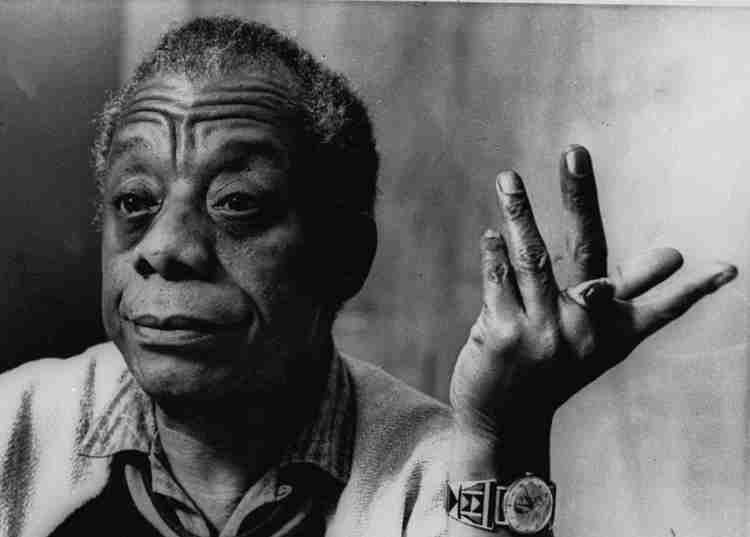
This week I read James Baldwin’s essay “The Harlem Ghetto” (found in Notes of a Native Son, pp. 59-73) and I found myself in the uncomfortable place of reading from my identity (which if it were to be a hyphenated-American would be white-American with ancestry from the former colonial powers of Britain and France, as far as I can tell from my partially reconstructed family tree) as Baldwin, a Black American, attempted to explain the tension between Black Americans in Harlem, New York, and Jews there.
He begins by unpacking a contradiction/tension in Black American thought from his era. He says that Black Americans have an “ambivalent relationship to the Jew,” explaining “To begin with, though the traditional Christian accusation that the Jews killed Christ is neither questioned nor doubted, the term ‘Jew’ actually operates in this initial context to include all infidels of white skin who have failed to accept the Savior.” But then points out that Black Americans identify with and adopt many Jewish stories like the Exodus (p. 68). This contradiction/tension indicates that antisemitism was common in Black American circles several decades ago and yet like many European and white-American Christians over the centuries, the stories of the Jews have been adopted, adapted, appropriated to tell the stories of other people—sometimes peoples who hate the Jews.
When it comes to sacred texts, those that remain important to the Jews (the Tanakh in Judaism) matter more to Christian Black Americans than the stories that are important only to Christians. Baldwin writes:
“But if the Negro has bought his salvation with pain and the New Testament is used to prove, as it were, the validity of this transformation, it is the Old Testament which is clung to and most frequently preached from, which provides emotional fire and anatomizes the path of bondage; and which promises vengeance and assures the chosen of their place in Zion.” (p. 69)
So, if Black Americans identify with the scriptures of Israel, the sacred texts of the Jews, why has the antisemitism found in Christian circles for millennia become part of the Black American Christian experience as well?
Baldwin notes that in the context of Harlem (pp. 69-70), “Jews in Harlem are small tradesmen, rent collectors, real estate agents, and pawnbrokers; they operate in accordance with the American business tradition of exploiting Negroes, and they are therefore identified with oppression and are hated for it.” In other words, the worst angles of capitalism—the Darwinian morals; the striving for more resources/capital; the willingness to exploit rather than be exploited—angles of capitalism often welded to white supremacist ideals, has been accepted by the Jews of Harlem and Black Americans were being exploited not only by those of white-European ancestry but by Jews who, as Baldwin will say, seem to have decided to take their share of “whiteness” rather than being at the punishing end of it.
Baldwin writes that when the Black American (p. 70), “hates the Jew as a Jew he does so partly because the nation does and in much the same painful fashion that he hates himself. It is an aspect of his humiliation whittled down to a manageable size and then transferred; it is the best form the Begro has for tabulating vocally his long record of grievances against his native land.”But here’s where Baldwin’s essay leaps into enlightenment for the reader, especially a reader with positionality like mine. Baldwin says, “At the same time, there is a subterranean assumption that the Jew should ‘know better,’ that he has suffered enough himself to know what suffering means.” This insight is sharp. The Black American has seen in the Jewish American a potential friend and ally but has felt betrayed; the Jewish American, on the other hand, who has themself been exploited, abused, violated, and murdered by white supremacists (most recently at the number of six million by the Nazis), has decided that Jews must protect Jews first. Baldwin comments, “The Jew, by the nature of his own precarious position, has failed to vindicate this faith. Jews, like Negroes, must use every possible weapon in order to be accepted, and must try to cover their vulnerability by a frenzied adoption of the customs of the country; and the nation’s treatment of Negroes is unquestionably a custom.” (p. 71)
Wow.
Baldwin adds that the drive to survive and thrive as Jews in American that has led many American Jews to exploit Black Americans in order to achieve some sense of safety; some sense of power, creates the following situation (p. 71):
“The Jew has been taught—and too often, accepts—the legend of Negro inferiority; and the Negro, on the other hand, has found nothing in his experience with Jews to counteract the legend of Semitic greed. Here the American white Gentile has two legends serving him at once: he has divided these minorities and he rules.”
In other words, the Jewish American accepts the myths of Black inferiority; the Black American accepts the myths of antisemitism. All the while, the white American, still in power, goes on living as he has in his place of privilege and power. Baldwin ends his essay a few pages later (p. 73) saying the following:
“Here the Jew is caught in the American crossfire. The Negro, facing a Jew, hates, at bottom not his Jewishness but the color of his skin. It is not the Jewish tradition by which he has been betrayed but the tradition of his native land. But just as a society must have a scapegoat, so hatred must have a symbol. Georgia has the Negro and Harlem has the Jew.”
Every semester, when I teach about Judaism as part of my class “Religion in Global Context,” I introduce my students to the history of antisemitism, how it relates to Zionism, how the Holocaust is the most grotesque example of the former, and added fuel to the latter, and how the Jewish experience in Europe, and European colonization of Africa-Asian lands (a.k.a. the Middle East and Egypt), shapes our modern world. I try to explain how, in part, the Israel-Palestinian conflict can be traced back to decisions by European colonial powers as exemplified by the Sykes-Picot Agreement. Baldwin’s essay reminds me of these realities. The Jews of Israel continue to see the looming threat of antisemitism all over the globe. Their decision to self-preserve is understandable even if one watches how Israel has chosen to self-preserve with a sense of dismay, whether it be the large walls separating Jews and Palestinians, the nature of Israeli settler-culture, or the military activity by Israel in Gaza. For some, I think part of the confusion is how Israel—in the eyes of many who interpret their actions as being oppressive of Palestinians and a continuance of European colonial power—don’t “know better,” as Baldwin put it. On the other hand, as Baldwin recognized, the history of the Jews has been one of survival. As a people, they’ve had to choose pragmatically—what will prevent our enemies from annihilating us? And because of this, the question remains for many Jews whether this requires, say, forceful oppression of Palestinians or whether another way is possible.
As a good liberal white-American, I want to promote the friendship of Rev. Dr. Martin Luther King Jr. and Rabbi Abraham Joshua Heschel as the answer. I want to use fancy language around “intersectionality”. But that doesn’t really address what I, in my place and time, with my identity, should do. It shows one option that Black Americans have; it shows one option that Jewish Americans have. But a person like me can’t be preachy. In fact, I don’t know that I have any role in helping make the world a better place with regards to this tension and these conflicts. I do know white-messianism is never the answer. I do know, the world is probably a better place when people like me are trying to be learners and followers rather than teachers and leaders (at least with regards to this subject matter and in the broader national and international contexts I’ve mentioned). Do I know what that means in real-time, tomorrow? No, I don’t.




 The blog of Brian LePort